

When discussing home renovation, the kitchen is always one of the most daunting spaces. It not only needs to accommodate the family's cooking needs but also hosts the laughter and joy of preparing meals. It's not just a place for cooking, but also a warm corner for family members to connect. However, an efficient, practical, and aesthetically pleasing kitchen isn't easy to create; it requires careful design and planning. In this article, we'll discuss how to create a personalized and efficient kitchen space.
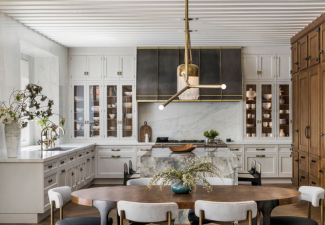
What are the different kitchen layouts, and how should different families choose?
Kitchen layout is a crucial aspect of home renovation. A well-planned layout can significantly improve cooking efficiency and the kitchen's aesthetics. Common layouts include linear, L-shaped, U-shaped, double-line, and G-shaped (U-shaped + island). Each layout has its unique advantages and suitable scenarios.
- Linear and L-shaped: For families with long, narrow spaces or those who can utilize corners, a linear layout is a good choice. It's simple and straightforward, suitable for small apartments, but it's essential to ensure sufficient space for movement in the middle.
- L-shaped layout: Suitable for families who need to efficiently utilize corner space. For example, a corner cabinet can cleverly utilize space and increase countertop area.
- U-shaped layout: A U-shaped layout is suitable for families with many members who need efficient work. It provides more countertop and storage space, making cooking more efficient. However, the central area of the U should be spacious enough for multiple people to work simultaneously.
- G-shaped layout: A G-shaped layout (U-shaped + island) is suitable for larger homes that need ample storage or kitchen work space. This layout not only optimizes workflow and corner space utilization but also increases the work area by adding an island, making the kitchen more multifunctional.
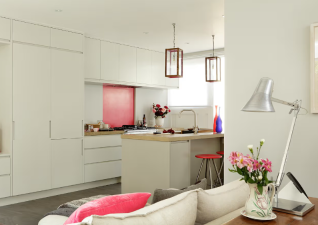
How to design kitchen storage to keep it organized and tidy over time?
- Workflow Design: Workflow design is key when designing kitchen storage. A good workflow makes the cooking process smooth and reduces unnecessary movement. For example, when designing a kitchen, you can arrange the refrigerator, sink, and stove in a straight line. This allows for a seamless process from retrieving ingredients to washing and cooking, greatly improving efficiency.
- The Principle of Proximity Storage
Another important principle of storage is proximity storage. Placing frequently used items near their location saves time and improves efficiency. For example, store pots and pans in cabinets near the stove and groceries in storage cabinets near the refrigerator.
Design Phase:
Determine your kitchen appliance needs in advance, decide on the models, and organize the water and electricity points and opening dimensions. You can ask the manufacturers for the dimensions and then provide them to the cabinet supplier to ensure a perfect fit.
Don't forget to consider heat dissipation; leave sufficient space for ventilation. It's even better if you buy appliances with good heat dissipation design.
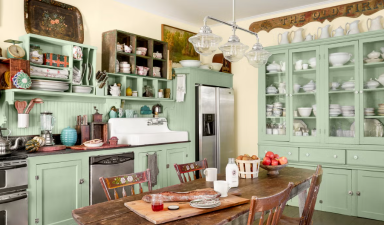
Water and Electricity Phase:
Plan the locations of power and water sources in advance. Conceal power outlets inside cabinets as much as possible, and ensure the depth accommodates the outlet or install recessed outlets. Plan the route and location of water pipes to ensure smooth connection to appliances.
During the plumbing and electrical handover, it's crucial to confirm the wiring and trenching for water pipes and electrical circuits with the foreman. If space permits, reserve electrical outlets for future renovations and appliance additions.
Custom Installation:
During the cabinet customization phase, materials are custom-made and produced according to the required embedding dimensions. It's advisable to bring appliances in after the cabinets are installed; otherwise, dust can easily damage the appliances. The installation of built-in appliances generally requires professional installation by the manufacturer. They have specialized procedures and equipment; for example, they can even level a slightly uneven floor to ensure the refrigerator is stable.